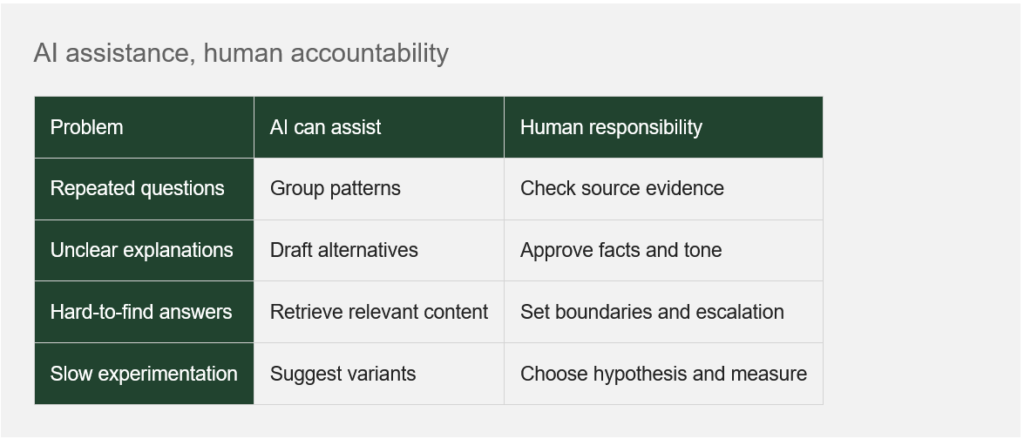
AI can accelerate research and production. It can also help a team publish a larger quantity of work that nobody needed. Define the problem before choosing the tool.
Use appropriately handled search queries and customer questions to identify repeated gaps. Ask AI to group themes, then inspect the original evidence. A confident summary can hide a useful exception.
Assist content development with alternative explanations, draft structures and consistency checks. Keep subject experts responsible for facts, claims and the final interpretation. Do not pass confidential customer information into an unapproved service.
For an on-site assistant, define its boundaries. Decide which sources it can use, which actions require confirmation and when a human should take over. Test unavailable information, misleading questions and failure states before launch.
Measure one application at a time. A better search experience might increase successful answer-finding; an assisted drafting process might reduce revision time without reducing accuracy. Agree the baseline before introducing the tool.
More pages, chatbot conversations or generated variations are activity counts. They become business evidence only when connected to a useful outcome.