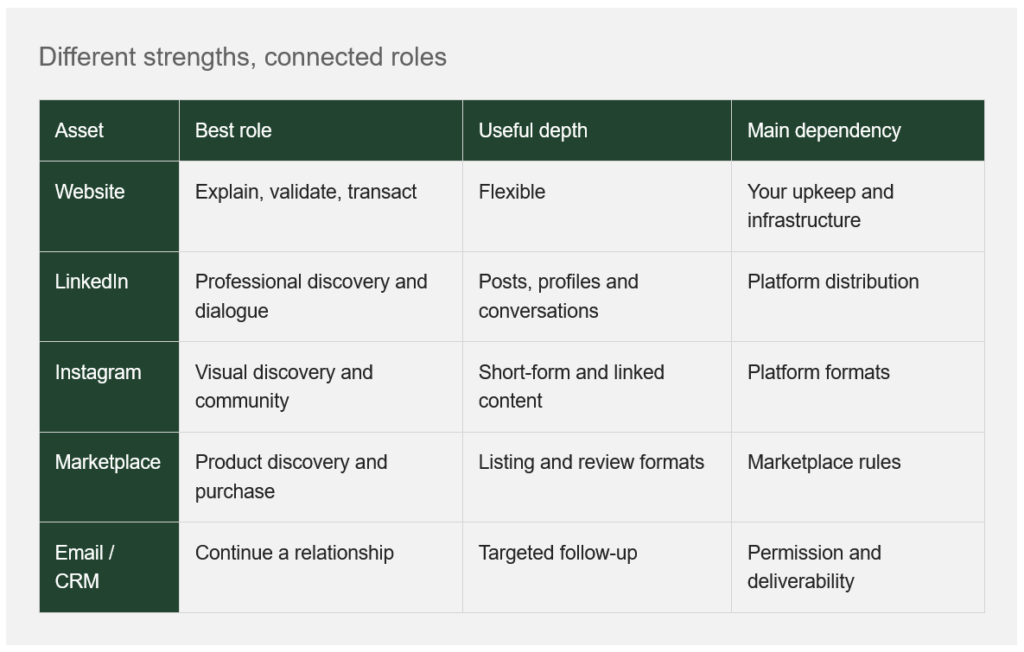
Your customer might discover you on Instagram, check your team on LinkedIn and visit your website before getting in touch. The useful question is what each stop contributes.
Social platforms are valuable places to distribute ideas and participate in conversations. Marketplaces can make products discoverable in a buying environment. A website gives you greater control over how information, evidence and actions fit together, although hosting, search and payment providers still create dependencies.
Avoid asking one channel to carry every responsibility. A short social post can earn attention, then lead to a detailed explanation. A website can help a referred buyer validate your experience without waiting for a sales call.
Audit the handovers. Does the offer on the social post exist on the destination page? Can a marketplace buyer find accurate product support? Are your credentials and contact details consistent?
Start with three customer questions: Why should I care? Can I trust you? What happens next? Assign an asset to answer each, then remove gaps and contradictions between them.